


From Tsinghua to Silicon Valley: Building Strength Through Diverse Skills
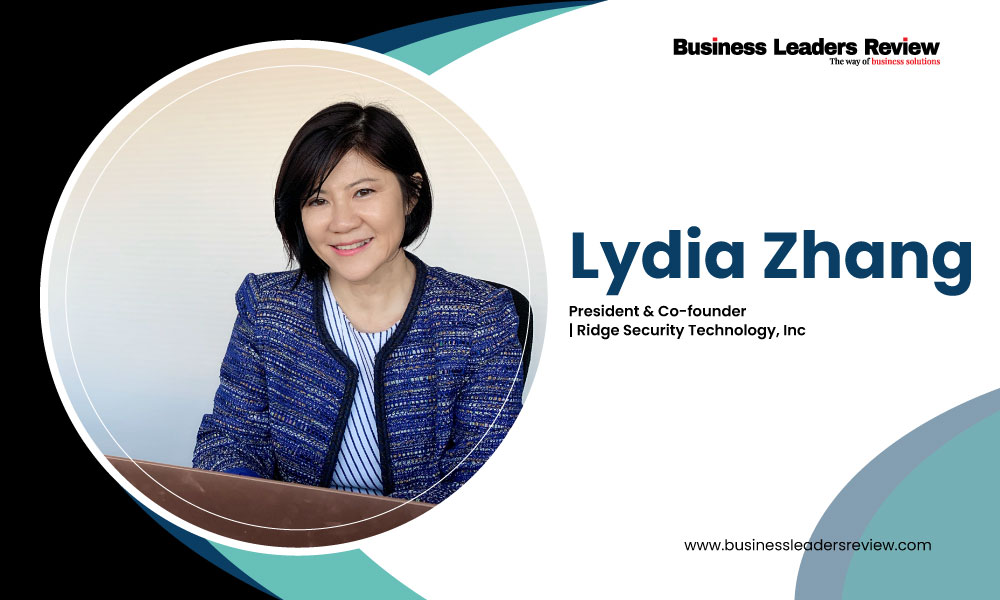
Lydia Zhang’s journey from one of the most prestigious engineering schools to the heart of Silicon Valley reflects a career built on technical excellence, resilience, and strategic vision. She began her academic journey at Tsinghua University, widely recognized as the top engineering institution in the world, where women represented only about one in ten students in engineering disciplines at the time. This environment shaped not only her technical foundation in electrical engineering and computer science but also strengthened her determination to thrive in male-dominated industries.
Later, Zhang pursued graduate studies in computer science and communications management at the University of Southern California (USC). The combination of technology and communication studies allowed her to develop a broader perspective that integrates technical depth with strategic thinking and business insight.
Beyond engineering, Zhang has always valued the power of communication and storytelling. The Communication Management program at USC’s Annenberg School enabled her to bridge technical complexity with strategic clarity, a skill that later became central to her leadership style and entrepreneurial success.
Corporate Foundations and the Entrepreneurial Leap
Zhang began her professional career at Cisco, where she spent 11 years working as a Product Manager for access routers, including core networking products that played a vital role in Cisco’s global business. In many ways, the role resembled that of a “mini-CEO,” requiring oversight across the entire product lifecycle, from concept and development to customer experience, go-to-market strategy, and profitability.
This experience provided Zhang with invaluable exposure to how world-class products are built and scaled globally. It also strengthened her understanding of market dynamics and enterprise customer needs.
After Cisco, she joined a fast-growing cybersecurity startup developing what was then the world’s fastest next-generation firewall. In a leadership role equivalent to both Chief Product Officer and Chief Marketing Officer, Zhang helped drive the company’s global expansion through strategic marketing and channel partnerships.
When the company successfully went public in 2019, Zhang and her co-founder Nick chose to pursue a new entrepreneurial journey, founding Ridge Security.
For Zhang, entrepreneurship is about creating something meaningful from the ground up. Building Ridge Security from zero to one represented not only a professional milestone but also an opportunity to address critical challenges within cybersecurity.
Closing Gaps and Earning a Seat at the Table
Throughout her career, Zhang has often found herself in environments where she was in the minority, whether as a woman studying engineering, a first-generation immigrant in Silicon Valley, or one of the few Asian women technology entrepreneurs leading cybersecurity innovation.
Rather than focusing on differences, Zhang concentrated on continuous learning and professional growth. She believes success comes from identifying knowledge gaps, strengthening technical expertise, and building strong business acumen.
Her philosophy is simple yet powerful: leadership positions are earned through dedication, capability, and resilience. By focusing on learning and delivering results, she consistently earned her place at the table.
Zhang also emphasizes the importance of interdisciplinary education for aspiring technology leaders. In high-tech industries, success requires a balance between technical innovation and understanding human behavior, market dynamics, and strategic direction. According to her, the ability to integrate these perspectives forms the foundation for building impactful technology companies.
The Birth of Ridge Security
Ridge Security was born out of a real industry challenge. During her time working in the firewall sector, Zhang noticed a critical gap in the cybersecurity ecosystem: while enormous investment existed on the defensive side, there were few practical tools available for offensive security testing.
To validate the effectiveness of defensive systems, organizations need powerful offensive tools—what Zhang describes as the relationship between the “spear and the shield.” Without strong penetration testing capabilities, it becomes difficult to assess whether security defenses truly work.
Penetration testing and red teaming are widely considered the most advanced areas of cybersecurity. However, they require highly skilled ethical hackers with years of training and experience. As cyber threats and attack surfaces continue to grow, the demand for such expertise far exceeds supply.
Recognizing this gap, Ridge Security developed a platform designed to replicate the intelligence and capabilities of experienced security professionals. The system performs automated penetration testing at scale, enabling organizations to continuously evaluate the security posture of their IT environments.
When new vulnerabilities or exploits emerge, customers can immediately test their infrastructure, identify weaknesses, apply fixes, and verify that vulnerabilities have been resolved. By presenting clear attack paths and evidence-based insights, the platform empowers Chief Information Security Officers (CISOs) to communicate risks effectively to leadership teams and mobilize resources to address critical threats.
While perfect defense may be impossible, Zhang believes proactive testing and continuous evaluation are essential to staying ahead of attackers.
Agentic AI and the Future of Cybersecurity
With its clear business value, offensive security has become one of the key areas applying LLM capabilities in practice. Over the past year, this field has become unprecedentedly active, with many startups and open-source frameworks emerging to deliver autonomous penetration testing. Ridge Security launched its agentic AI framework, RidgeGen, and the commercial service debuted at RSAC 2026.
In response to the recent release of Claude Code Security, cybersecurity company stock prices dropped sharply, reflecting complex market sentiment. Clearly, AI models with deep contextual understanding of code and vulnerabilities are reshaping the industry, both by strengthening cybersecurity and by introducing new security concerns.
Solutions that primarily focus on relatively static analysis, such as Static Application Security Testing (SAST), which identifies vulnerabilities through source code scanning, as well as traditional vulnerability scanning and management tools, will face significant challenges as technical barriers become increasingly commoditized.
However, areas involving real-world deployment, complex network topologies, and organization-specific configurations and policies, all of which require human judgment and decision-making, remain highly challenging. AI can significantly improve efficiency in these domains, but human judgment, experience, and contextual decision-making continue to make the critical difference. At Ridge Security, we aim to apply our deep domain expertise on top of LLM models to dynamically address these complex challenges.
Innovation Driven by Real-World Problems
Zhang believes the most meaningful innovation emerges from real customer challenges. Her philosophy is to embrace technological change rather than resist it.
She often uses an example from the past: how Voice over Internet Protocol (VoIP) dramatically reduced the cost of international phone calls and disrupted entire industries. While some traditional businesses disappeared, entirely new markets and technologies, such as audio conferencing, emerged. AI is bringing an even bigger wave than VoIP or the Internet—the key point is that even larger and newer opportunities will emerge. In the same way, AI will continue to reshape cybersecurity and create new opportunities for innovation. For Ridge Security, the focus remains clear: identify real problems, deliver measurable value to enterprise customers, and continuously evolve alongside technological change.
As Lydia Zhang continues to lead Ridge Security into the future, her journey exemplifies how technical expertise, strategic vision, and resilience can transform challenges into opportunities, making her one of the most influential women entrepreneurs shaping the cybersecurity landscape today.
About Ridge Security Technology, Inc.
Ridge Security Technology, Inc. is a Silicon Valley-based cybersecurity company that develops AI-powered platforms for automated penetration testing and continuous security validation. Its flagship platform, RidgeBot, helps enterprises simulate real-world cyberattacks to identify cybersecurity risks and strengthen their security posture.
Company Details
- Company Name: Ridge Security Technology, Inc
- Founding Year: 2020
- Office Locations: Silicon Valley, California
- Official Website: https://ridgesecurity.ai/
- Industry/ Sector: Cybersecurity, Adversarial Exposure Validation, Agentic-AI based Offensive Security
Leader’s Profile
- Name of the Featured Leader: Lydia Zhang
- Designation: President & Co-founder
- Brief Background & Experience:
Lydia’s career in networking and cybersecurity is defined by entrepreneurial drive and strategic leadership. A pioneer in applying artificial intelligence to cybersecurity, from machine learning and deep learning to agentic AI, she has led teams that built industry-leading solutions spanning defensive protection and offensive security testing. Lydia began her career at Cisco in product management and later played a key executive role in scaling a next-generation firewall company from early startup to IPO. She is now Co-founder and President of Ridge Security, an AI-driven company advancing offensive security.
Lydia is a member of the Forbes Technology Council, a published author, and a frequent industry speaker. Her leadership and product vision have earned multiple honors, including a Stevie Award for Women in Business, CRN Woman of the Channel, and the Global Infosec Award for Pioneering Women in Cybersecurity. She holds dual master’s degrees from USC and dual bachelor’s degrees from Tsinghua University.
Company Highlights
- Key Services/ Offerings: Ridge Security offers autonomous penetration testing, exposure validation, and continuous security validation designed to help enterprises proactively identify and remediate risks. Its AI-driven approach enables security teams to test defenses at scale and stay ahead of emerging threats.
- Major Achievements or Recognitions: Ridge Security has earned significant industry recognition – among many other honors – including being named a Sample Vendor in Gartner’s Market Guide for Adversarial Exposure Validation, recognized as a Strong Performer in Gartner’s Voice of the Customer report, awarded Frost & Sullivan’s 2026 New Product Innovation honor for Global Automated Security Validation Excellence, and featured on CRN’s Tech Elite 250 and TMCnet’s Cybersecurity Excellence 2025 lists.